


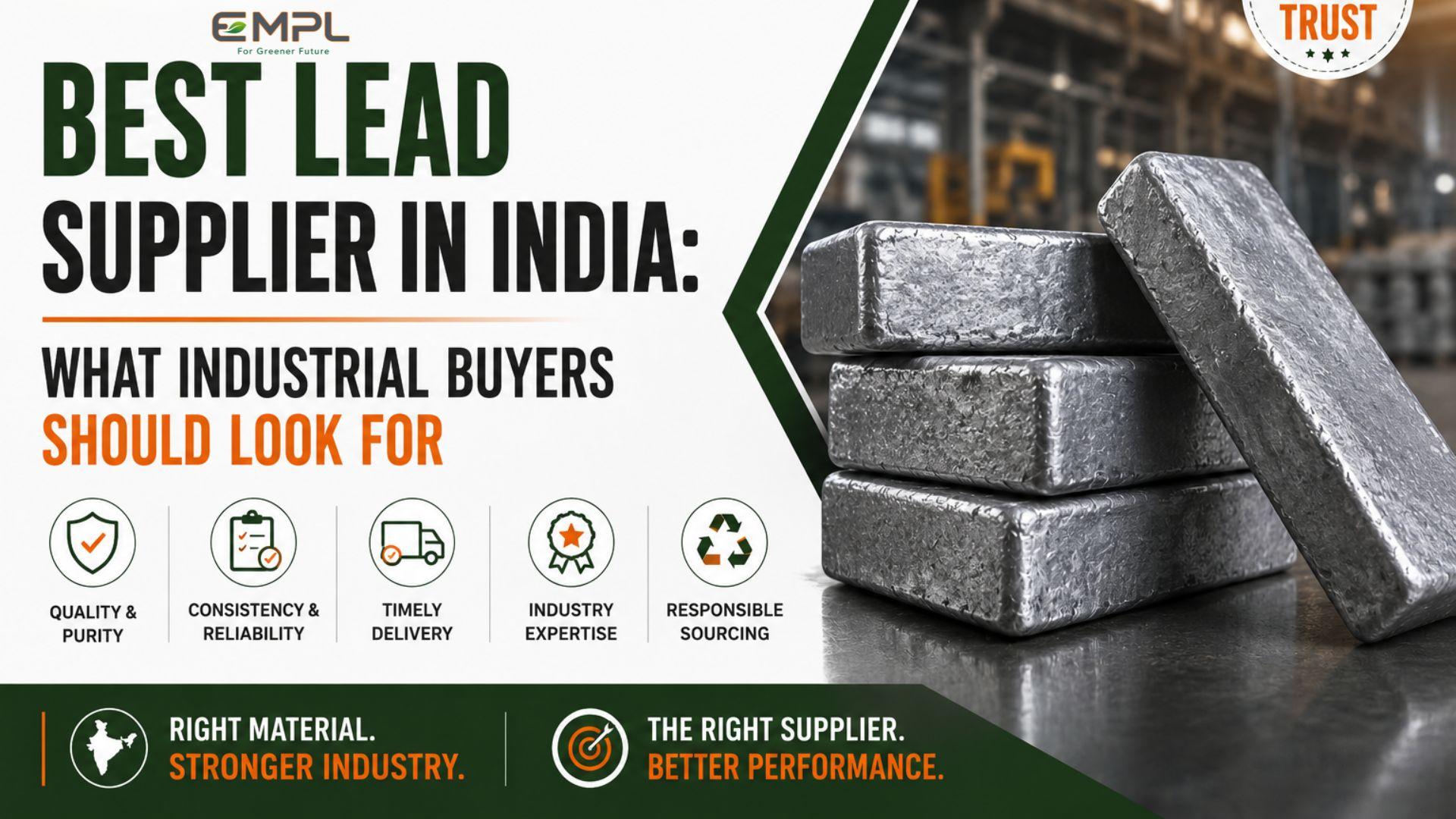
When industrial production depends on lead or lead alloys, choosing the right supplier is about much more than finding the lowest price. Material quality, purity, consistency, technical capability, delivery reliability and responsible sourcing can all influence the performance of the final product and the efficiency of the manufacturing process.
For buyers searching for the best lead supplier in India, the real question should be:
Which supplier can consistently deliver the right material, in the right specification, with the reliability your business requires? Or, How to Choose the Right Metal Supplier for Your Industry Needs?
Whether you source pure lead, lead alloys, recycled lead, lead ingots or customized lead compositions, evaluating your supplier carefully can help reduce production risks and build a more dependable supply chain.
This guide explains the key factors industrial buyers should consider when selecting a lead supplier in India.
Why Choosing the Right Lead Supplier Matters
Lead is used across a wide range of industrial applications, including batteries, radiation shielding, chemicals, cables, automotive components, construction and specialized manufacturing.
In these applications, material inconsistency can create several challenges, such as:
- Variations in product performance
- Production inefficiencies
- Increased rejection rates
- Difficulty in maintaining quality standards
- Higher processing costs
- Supply chain disruptions
This is why industrial buyers should look beyond the basic lead price per kg or the lowest quotation.
A reliable lead metal supplier in India should be capable of providing not only material, but also consistency and confidence throughout the procurement process.
1. Check Lead Purity and Material Quality
One of the first factors buyers should evaluate is the purity and composition of the lead.
Different applications require different material specifications. For example, some manufacturing processes may require high-purity lead, while others may require specific lead alloys containing elements such as antimony or tin.
Before selecting a supplier, buyers should clearly understand:
- Required lead purity
- Chemical composition
- Permissible impurity levels
- Required alloying elements
- Application-specific specifications
A reliable supplier should be able to provide material according to agreed technical requirements rather than treating every industrial requirement as the same.
Questions industrial buyers should ask:
- What is the specified purity of the lead?
- Is the chemical composition consistent across batches?
- Can the supplier provide material according to custom specifications?
- What quality checks are performed before dispatch?
For industries where precision matters, even small variations in material composition can affect downstream manufacturing.
2. Consistency Is More Important Than a Single Good Batch
Receiving high-quality material once is not enough.
Industrial manufacturing requires batch-to-batch consistency. A supplier should be able to maintain similar quality standards over repeated orders.
This is particularly important for manufacturers that operate continuous production lines or maintain strict internal quality requirements.
A dependable lead ingot supplier should focus on consistency in:
- Chemical composition
- Purity levels
- Physical form
- Weight and packaging
- Material performance
- Supply availability
Consistency helps manufacturers maintain stable processes and reduces the need for frequent production adjustments.
The best supplier is not simply the one who delivers good material today, but the one who can maintain the same standards over time.
3. Evaluate Manufacturing and Processing Capabilities
Industrial buyers should understand how their supplier processes and prepares lead and lead alloys.
A supplier with strong manufacturing capabilities is generally better positioned to maintain control over quality and production.
Important areas to evaluate include:
Raw Material Handling
The quality of the final lead product depends significantly on how raw materials are sourced, segregated and processed.
Smelting and Refining
A controlled refining process helps achieve the desired purity and remove unwanted impurities.
Alloy Manufacturing
For applications requiring lead alloys, precise control over alloy composition is essential.
Quality Testing
Material should be tested at appropriate stages to verify whether it meets the required specifications.
Production Capacity
The supplier should have sufficient capacity to meet both regular and increasing demand.
Industrial buyers should ideally work with suppliers that understand the complete journey from raw material processing to finished lead products.
4. Ask About Quality Control and Testing
Quality should not be based only on verbal assurance.
A professional lead and lead alloy supplier should have a defined quality control process.
Depending on the product and application, buyers may look for information related to:
- Chemical composition testing
- Purity verification
- Batch inspection
- Process monitoring
- Material traceability
- Internal quality procedures
Documentation can also play an important role in industrial procurement.
For larger or technically demanding applications, buyers should discuss their exact testing and documentation requirements before placing regular orders.
A good question to ask is:
“How do you ensure that the material supplied today will match the required specification in future orders?”
The answer often reveals how seriously a supplier approaches quality management.
5. Look for Experience in Your Industry
Not every lead supplier understands every application.
A supplier that works with multiple industrial sectors may have a better understanding of how material properties affect different manufacturing processes.
For example, the requirements of a battery manufacturer can be different from those of a radiation shielding company or a manufacturer using specialized lead alloys.
An experienced supplier can help buyers better understand:
- Which grade may suit a specific application
- Whether pure lead or a lead alloy is more appropriate
- Which material properties are important
- How consistency can affect production
This does not mean a supplier should replace the buyer's engineering or technical team. However, industry experience can add value when discussing material requirements and procurement decisions.
6. Supply Reliability and Delivery Capability
Even the highest-quality material can become a problem if it does not arrive when production needs it.
Supply reliability is therefore one of the most important factors when selecting the best lead supplier in India.
Buyers should evaluate:
- Production capacity
- Inventory management
- Order fulfillment capability
- Packaging standards
- Logistics coordination
- Delivery timelines
- Ability to handle repeat orders
For manufacturers, delayed material can lead to:
- Production interruptions
- Missed customer commitments
- Emergency procurement at higher prices
- Increased operational costs
A dependable supplier understands that timely delivery is part of product quality.
Quality material delivered late can still create a manufacturing problem.
7. Compare More Than Just Lead Prices
Price will always be an important part of industrial procurement. However, selecting a supplier based only on the lowest price can sometimes increase costs elsewhere.
A lower-priced material may result in:
- Inconsistent composition
- Higher rejection rates
- Additional processing requirements
- Production downtime
- Frequent supplier changes
- Greater quality risks
Instead of comparing only the quoted rate, buyers should consider the total value offered by the supplier.
This includes:
| Evaluation Factor | What Buyers Should Consider |
|---|---|
| Material Quality | Does it meet the required specification? |
| Consistency | Is the quality stable across batches? |
| Pricing | Is the price competitive and transparent? |
| Delivery | Can the supplier meet required timelines? |
| Capacity | Can they support long-term requirements? |
| Technical Understanding | Do they understand industrial applications? |
| Communication | Are requirements handled clearly and professionally? |
The lowest purchase price is not always the lowest overall manufacturing cost.
8. Consider Custom Lead Alloy Requirements
Some industries do not require standard products. They may need a specific composition designed around their manufacturing process.
In such cases, buyers should look for a supplier capable of supporting custom lead alloy requirements.
Depending on the application, this may involve controlled combinations of:
- Lead
- Antimony
- Tin
- Other required alloying elements
Before selecting a supplier, buyers should discuss:
- Required composition
- Tolerance levels
- Expected performance
- Batch size
- Repeatability requirements
The ability to understand and consistently manufacture application-specific material can be a major advantage for industrial buyers.
9. Responsible Recycling and Sustainability
Lead is a highly recyclable material, making responsible recycling an important part of the industrial supply chain.
For buyers focused on sustainability, it is useful to understand how the supplier approaches:
- Lead recycling
- Scrap processing
- Resource recovery
- Material efficiency
- Responsible handling practices
Recycled lead can play an important role in supporting a more circular industrial economy when processed through controlled and responsible systems.
Choosing a supplier with a strong focus on responsible recycling and material recovery can help businesses align their procurement practices with broader sustainability goals.
10. Communication and Long-Term Business Support
Industrial procurement is not always a one-time transaction.
Material requirements may change. Production volumes may increase. Specifications may need to be adjusted.
That is why communication matters.
A good supplier should be responsive and capable of understanding:
- Technical requirements
- Quantity requirements
- Delivery schedules
- Quality expectations
- Long-term supply planning
Strong supplier relationships can make procurement more efficient and help businesses respond faster to changing production requirements.
The best industrial partnerships are built on more than purchase orders. They are built on consistency, transparency and long-term reliability.
A Practical Checklist for Choosing a Lead Supplier in India
Before finalizing a supplier, industrial buyers can use this simple checklist:
Material Quality
✔ Does the supplier understand your required grade and specification?
✔ Is the purity or alloy composition clearly defined?
Consistency
✔ Can they maintain quality across repeated batches?
✔ Do they have processes to control material variation?
Manufacturing Capability
✔ Do they have adequate production and processing capabilities?
✔ Can they handle your current and future requirements?
Quality Control
✔ Are materials tested and checked before supply?
✔ Can relevant quality information be provided when required?
Supply Reliability
✔ Can the supplier meet delivery timelines?
✔ Do they have the capacity to support regular orders?
Commercial Value
✔ Is pricing transparent and competitive?
✔ Are you evaluating total value rather than only the lowest price?
Sustainability
✔ Does the supplier follow responsible recycling and material recovery practices?
Relationship and Support
✔ Are they responsive and easy to communicate with?
✔ Can they support a long-term industrial relationship?
Why EMPL Focuses on Quality, Consistency and Responsible Manufacturing
At EEYA Metal & Alloys Pvt. Ltd. (EMPL), we understand that industrial buyers need more than just a supplier.
They need a dependable source of materials that supports their manufacturing requirements with a focus on quality, consistency and responsible material processing.
Our approach is centered around understanding industrial requirements and delivering materials suitable for a wide range of applications, including lead and lead alloy requirements.
With a focus on manufacturing capability, quality-oriented processes and responsible recycling, EMPL aims to build long-term relationships with industries that value dependable supply and consistent material performance.
Whether your requirement involves high-purity lead, lead alloys or recycled lead products, choosing the right material partner can make a meaningful difference to your supply chain and manufacturing efficiency.
Also Read: How to Choose the Right Alloy for Your Industry | Complete Guide
Final Thoughts: The Best Lead Supplier Is the One That Supports Your Manufacturing Goals
There is no single definition of the best lead supplier in India.
For one buyer, the priority may be purity. For another, it may be consistent alloy composition, bulk supply capacity, timely delivery or responsible recycling.
The right supplier is the one that can consistently meet your specific industrial requirements.
When evaluating lead suppliers in India, look beyond the quotation.
Consider:
Quality. Consistency. Capability. Reliability. Transparency. Sustainability.
Because in industrial manufacturing, the right material supplier is not simply a vendor.
They become an important part of your production process.


