


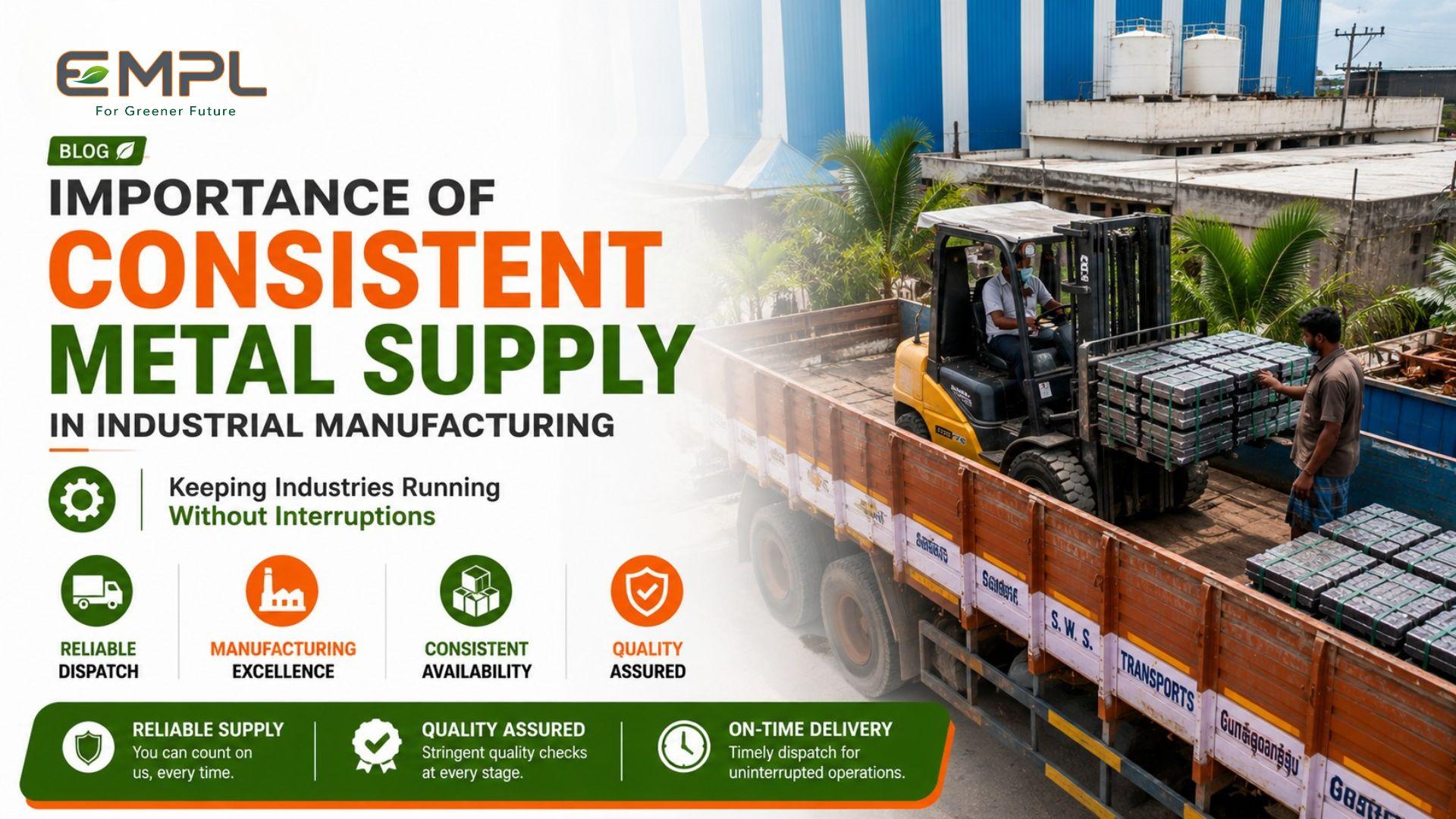
In today's highly competitive industrial environment, manufacturing success depends on more than advanced machinery and skilled manpower. One of the most critical factors influencing productivity, profitability, and customer satisfaction is the availability of a consistent and reliable metal supply.
Industries such as automotive, battery manufacturing, construction, infrastructure, power generation, telecommunications, and engineering rely heavily on metals and metal alloys for uninterrupted production. Any disruption in material availability can lead to production delays, increased costs, missed delivery schedules, and loss of customer trust.
This is why consistent metal supply has become a strategic priority for manufacturers worldwide.
Why Consistent Metal Supply Matters
Raw materials are the foundation of every manufacturing operation. Without a steady supply of quality metals, production lines cannot operate efficiently.
A reliable metal supply ensures that manufacturers can:
-
Maintain uninterrupted production schedules
-
Meet customer delivery commitments
-
Optimize inventory management
-
Reduce operational risks
-
Improve overall manufacturing efficiency
When metal availability becomes unpredictable, even the most advanced production facilities can face significant challenges.
Preventing Production Downtime
One of the biggest consequences of inconsistent metal supply is production downtime.
Manufacturing facilities operate on carefully planned schedules. When raw materials fail to arrive on time, machines sit idle, labor productivity declines, and production targets are missed.
The cost of downtime extends beyond immediate production losses. Delays can affect:
-
Customer commitments
-
Project timelines
-
Contract obligations
-
Revenue generation
-
Brand reputation
By partnering with dependable metal suppliers, manufacturers can ensure a steady flow of materials and minimize costly interruptions.
Improving Manufacturing Efficiency
Manufacturing efficiency depends heavily on process continuity.
A consistent supply of metals enables production teams to:
-
Plan operations more effectively
-
Optimize machine utilization
-
Reduce changeover delays
-
Improve workflow management
-
Maintain production momentum
When materials are readily available, manufacturing processes become more predictable and efficient, leading to higher productivity and lower operating costs.
Supporting Better Inventory Management
Inventory management is a balancing act.
Holding excessive inventory increases storage costs and ties up working capital, while insufficient inventory creates the risk of production stoppages.
Reliable metal suppliers help manufacturers maintain optimal inventory levels by providing:
-
Scheduled deliveries
-
Accurate forecasting support
-
Consistent lead times
-
Supply chain stability
This allows manufacturers to implement lean inventory strategies while maintaining confidence in material availability.
Ensuring Product Consistency
Consistency in supply is closely linked to consistency in product quality.
When manufacturers frequently switch suppliers due to supply shortages, variations in metal composition, purity, and quality may occur.
These variations can result in:
-
Product defects
-
Performance inconsistencies
-
Increased rejection rates
-
Customer dissatisfaction
A trusted metal supplier delivers materials with consistent quality standards, enabling manufacturers to maintain reliable product performance and meet customer expectations.
Strengthening Supply Chain Resilience
Global industries have experienced significant supply chain disruptions in recent years due to economic uncertainty, transportation challenges, geopolitical factors, and fluctuations in raw material availability.
As a result, manufacturers are placing greater emphasis on supply chain resilience.
A dependable metal supplier contributes to resilience by offering:
-
Reliable sourcing networks
-
Stable production capabilities
-
Consistent delivery schedules
-
Effective risk management
Strong supplier relationships help manufacturers navigate market uncertainties while maintaining business continuity.
Reducing Overall Production Costs
Many manufacturers focus primarily on material prices when selecting suppliers. However, the true cost of inconsistent supply often exceeds any savings gained from lower procurement costs.
Supply disruptions can lead to:
-
Emergency purchases
-
Expedited shipping costs
-
Production delays
-
Overtime expenses
-
Lost business opportunities
Reliable supply helps manufacturers avoid these hidden costs while improving operational efficiency and profitability.
Supporting Long-Term Industrial Growth
As businesses expand, their demand for metals and alloys increases.
Manufacturers require suppliers that can scale alongside their growth and consistently meet evolving requirements.
A strong metal supply partnership supports:
-
Capacity expansion
-
New product development
-
Market growth initiatives
-
Long-term strategic planning
Manufacturers that establish dependable supplier relationships gain greater confidence in their ability to pursue growth opportunities.
The Role of Sustainability in Modern Metal Supply
Sustainability is becoming increasingly important across industrial sectors.
Manufacturers are seeking suppliers that can provide high-quality recycled metals while maintaining strict quality standards.
Responsible metal recycling offers several benefits:
-
Conservation of natural resources
-
Reduced environmental impact
-
Lower carbon emissions
-
Support for circular economy initiatives
Reliable suppliers that integrate sustainable practices into their operations help manufacturers achieve both operational and environmental goals.
Choosing the Right Metal Supply Partner
When evaluating metal suppliers, manufacturers should consider more than pricing alone.
Key factors include:
Quality Consistency
Materials should meet stringent quality standards across every batch.
Production Capability
The supplier must have sufficient capacity to support ongoing demand.
Delivery Reliability
Consistent lead times are essential for efficient planning.
Technical Expertise
Industry knowledge helps suppliers support customer requirements effectively.
Sustainability Commitment
Environmentally responsible practices increasingly influence procurement decisions.
A supplier that excels in these areas becomes a strategic partner rather than simply a vendor.
How EMPL Supports Reliable Industrial Manufacturing
At EEYA Metal & Alloys Pvt. Ltd. (EMPL), we understand that consistent metal supply is critical to manufacturing success.
Our commitment to operational excellence, responsible recycling, quality control, and dependable delivery enables us to support industries with reliable metal solutions tailored to their requirements.
By combining advanced manufacturing capabilities with sustainable practices, EMPL helps businesses maintain productivity, reduce risks, and achieve long-term growth.
Conclusion
In industrial manufacturing, consistency drives performance.
A reliable metal supply ensures uninterrupted production, supports product quality, strengthens supply chain resilience, and improves overall operational efficiency.
As industries continue to evolve, manufacturers that prioritize dependable supplier partnerships will be better positioned to meet customer expectations, manage risks, and achieve sustainable growth.
Because in manufacturing, success is not only determined by what you produce—it is also determined by the reliability of the materials that power your production every day.
Building Strength. Delivering Trust.


