


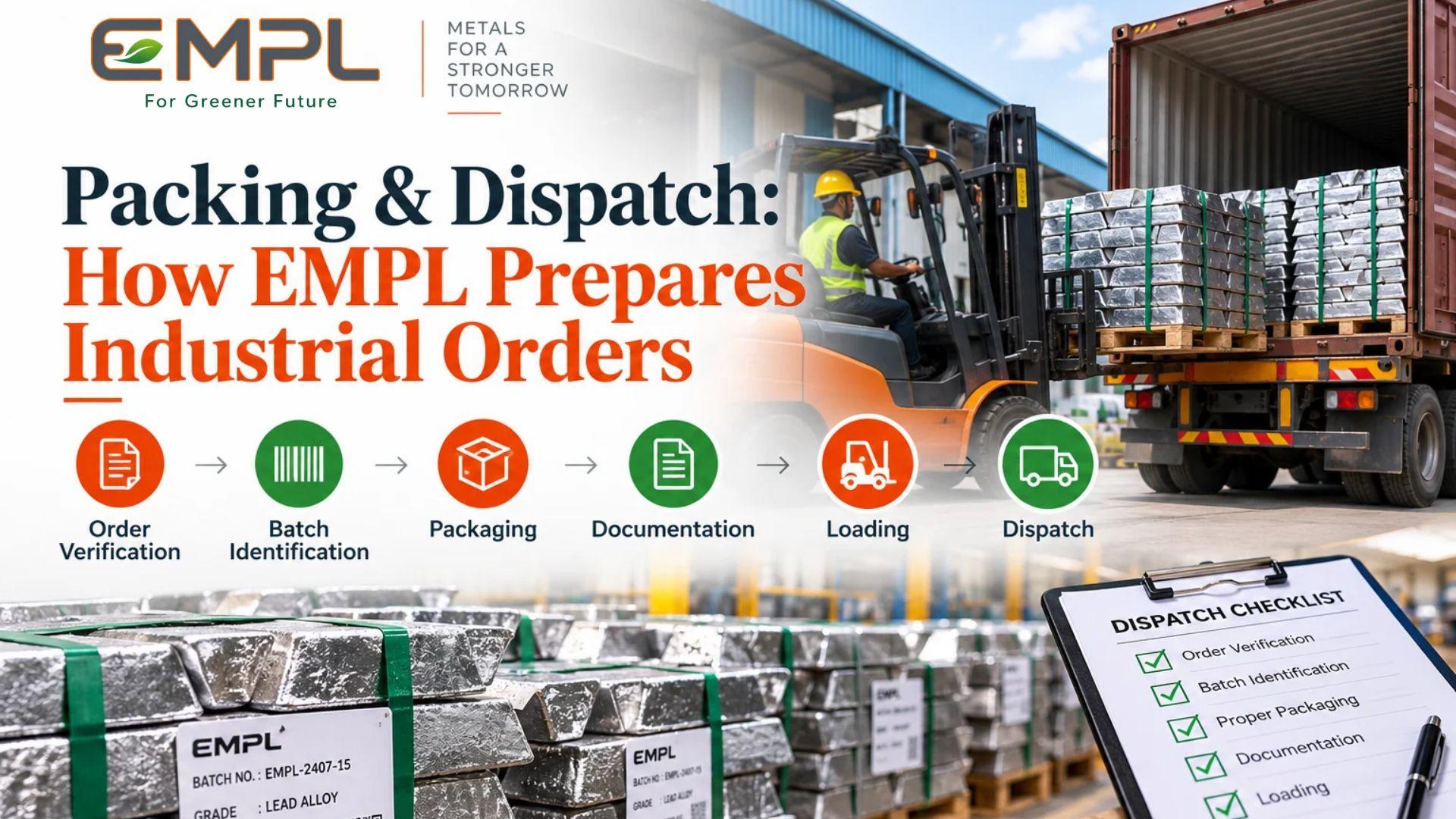
Packing & Dispatch: How EMPL Prepares Industrial Orders
In industrial metal supply, quality is not only about the material itself. How an order is verified, identified, packed, documented, and dispatched also plays an important role in ensuring a smooth supply experience.
For manufacturers and industrial buyers, receiving the correct material in the right quantity, with suitable packaging and accurate documentation, is essential for maintaining production schedules and managing inventory. Even when the material meets the required specifications, errors in order preparation or dispatch can create unnecessary delays, handling issues, and additional costs.
At EEYA Metal & Alloys Pvt. Ltd. (EMPL), packing and dispatch are important topics in the broader conversation about reliable industrial metal supply. Understanding the stages involved helps buyers recognise what to look for when evaluating a metal supplier and preparing their own procurement processes.
In this article, we explore the key stages of industrial order preparation, including order verification, batch identification, packaging, documentation, loading, and dispatch.
1. Order Verification: Starting with the Right Requirements
Before an industrial order moves towards packing and dispatch, its requirements need to be clearly understood and checked.
Order verification helps ensure that the material being prepared corresponds to what the customer has requested. This is particularly important when orders involve different metal grades, alloy compositions, quantities, or packaging requirements.
Key details to verify may include:
-
Material specification: The requested metal grade or alloy composition.
-
Order quantity: The agreed quantity and unit of measurement.
-
Product form: Whether the order requires ingots or another specified material form.
-
Packaging requirements: Any agreed requirements for packing, handling, or storage.
-
Delivery details: The destination, delivery schedule, and relevant shipping instructions.
Accurate order information reduces the likelihood of mismatches between customer expectations and the material prepared for dispatch.
For industrial buyers, providing complete specifications and confirming order details early can help prevent avoidable clarification requests and delays later in the process.
Also Read: Lead, Tin & Antimony: Understanding Their Role in Industrial Alloys
2. Batch Identification: Supporting Material Traceability
Batch identification helps connect a material consignment with its relevant production, inspection, or supply records, where such records are maintained.
In industrial metal supply, clear identification can support inventory management, material verification, and communication between suppliers and customers.
Depending on the supplier's processes and the requirements of the order, batch-related information may include:
-
Material or alloy designation
-
Batch or lot reference
-
Relevant inspection or test records
-
Quantity and packaging identification
-
Associated order or dispatch reference
The precise information available depends on the material, documentation system, and agreed customer requirements.
Why Is Batch Identification Important?
When material identification is clear and consistent, buyers can more easily distinguish between different consignments, organise incoming inventory, and refer to the appropriate documentation when questions arise.
For manufacturers handling multiple metal grades or alloy specifications, this can be particularly useful in maintaining orderly material records.
Batch identification should accurately reflect the records available. It should not be treated as a substitute for chemical testing, quality verification, or compliance documentation where those are required.
3. Packaging: Preparing Metals for Safe Handling and Transport
Industrial metal packaging must account for the material's physical characteristics, weight, handling method, transport conditions, and customer requirements.
The right packaging approach can help keep a consignment organised, support safer handling, and reduce the risk of avoidable damage or material loss during transportation.
Important Packaging Considerations
Material stability: The material should be arranged and secured appropriately for its form, weight, and transport method.
Handling requirements: Packaging should be compatible with the equipment and methods used for lifting, moving, and unloading the consignment.
Identification: Suitable labels or markings can help identify the material and link it to the relevant order or records.
Transport protection: Packaging should be appropriate for the anticipated journey and conditions of storage and handling.
Safety requirements: The packaging, containment, and handling arrangements must comply with the applicable safety and transport requirements for the material.
Lead and certain other industrial metals require particular attention to safe handling and housekeeping because of their associated health and environmental hazards. Applicable precautions should be followed throughout packaging, storage, loading, and transport.
The appropriate packaging method will vary according to the material, order size, destination, and agreed requirements. There is no single packaging solution suitable for every industrial metal consignment.
4. Documentation: Keeping the Order Information Clear
Documentation is an important part of industrial order preparation because it helps suppliers, transport providers, and customers understand what is being shipped and how the consignment relates to the original order.
The documents required will depend on the transaction, product, destination, applicable regulations, and customer agreement.
Depending on the order, relevant documents may include:
-
Sales invoice
-
Packing list
-
Delivery challan or other applicable dispatch document
-
Certificate of analysis or material test report, where applicable
-
Transport or shipment documentation
-
Other customer-specific or regulatory documents, where required
Why Accurate Documentation Matters
Order confirmation: Documents help buyers verify the commercial details and material description associated with a shipment.
Inventory management: Clear descriptions and quantities support receiving, stock recording, and reconciliation.
Material verification: Relevant test reports or certificates can help customers assess whether the supplied material meets the agreed specification.
Record keeping: Consistent documentation supports communication and provides useful references for future enquiries.
Regulatory compliance: Appropriate commercial, transport, and regulatory documentation helps meet the requirements applicable to the shipment.
Documents should be accurate, consistent with the order, and available as required. Any claims regarding chemical composition or material conformity should be supported by the relevant evidence rather than inferred from the product description alone.
5. Loading: Preparing the Consignment for Transportation
Loading is another important stage in the industrial dispatch process. Even when material has been correctly identified and packed, unsuitable loading arrangements can introduce handling risks or affect the stability of the consignment during transit.
Loading arrangements should be appropriate for the consignment's weight, dimensions, packaging, vehicle type, and unloading requirements.
Key considerations include:
Safe Handling
Appropriate equipment and trained personnel should be used where required. The handling method must suit the material and its packaging.
Load Stability
The consignment should be arranged and secured to help prevent shifting, falling, or damage during transportation.
Weight Distribution
The load should comply with the vehicle's rated capacity and applicable transport requirements, including suitable weight distribution.
Quantity and Identification Checks
Where applicable, loading checks can help confirm that the correct packages and quantities are included in the shipment.
Safety and Housekeeping
The loading area should be managed to reduce avoidable hazards, while relevant precautions should be followed for the material being handled.
A well-planned loading process helps connect warehouse preparation with safe and organised transportation.
6. Dispatch Coordination: Moving Orders According to the Plan
Dispatch coordination connects order preparation with the movement of goods to the customer. It involves ensuring that the consignment is ready, the required information is available, and transportation arrangements align with the agreed delivery plan.
Depending on the order, dispatch coordination may involve:
-
Confirming material readiness
-
Checking the order and shipment details
-
Coordinating vehicle availability
-
Preparing required documents
-
Recording dispatch information
-
Communicating relevant shipment details to the customer
Effective coordination can help reduce confusion between order preparation, loading, transportation, and customer receiving teams.
For industrial buyers, clear communication about dispatch schedules and shipment references can make it easier to plan material receipts and coordinate production activities.
Delivery timelines can still be affected by factors such as transport availability, route conditions, weather, and other external circumstances. Clear communication helps manage expectations, but it does not eliminate every possible delay.
Also Read: How Quality Control Impacts Industrial Metal Performance
7. How Packing and Dispatch Affect Industrial Supply Reliability
Industrial buyers often evaluate suppliers on product quality, price, and availability. However, order preparation and dispatch also influence the overall supply experience.
A well-organised dispatch process can contribute to:
Fewer order discrepancies: Clear verification helps reduce the likelihood of incorrect material or quantity being prepared.
Better inventory control: Identification and documentation support more organised stock receiving and record keeping.
Improved handling: Suitable packaging and loading arrangements help manage risks associated with transporting heavy industrial materials.
Clearer communication: Accurate shipment information makes it easier for buyers and suppliers to coordinate.
More efficient receiving: Correct documentation and identifiable consignments can help receiving teams process deliveries more smoothly.
These benefits depend on the quality of the processes followed by the supplier and the cooperation of the parties involved in the shipment.
8. What Industrial Buyers Should Check Before Accepting a Metal Delivery
Suppliers and customers share responsibility for making the receiving process clear and efficient. Industrial buyers can establish a practical incoming-delivery checklist to help verify that a consignment corresponds to the order.
Before accepting or processing a delivery, buyers may wish to check:
-
Material description: Does the supplied material match the agreed product or alloy specification?
-
Quantity: Does the delivered quantity match the relevant order and shipping documents?
-
Packaging condition: Is the packaging suitable and in acceptable condition?
-
Identification: Are material labels and references clear, where applicable?
-
Documentation: Are the required invoice, packing list, test records, and other documents available?
-
Visible condition: Is there any visible damage, contamination, or discrepancy that requires attention?
-
Discrepancy reporting: Is there a clear process for notifying the supplier about any mismatch or delivery issue?
Visual inspection alone cannot establish the chemical composition or purity of a metal. Where the application requires composition verification, buyers should follow the agreed inspection and testing procedure.
Maintaining receiving records and reporting discrepancies promptly can help both parties investigate issues more effectively.
9. Building Confidence Through a Structured Order Journey
Reliable industrial supply involves several connected stages rather than a single activity. Order verification establishes what is required. Identification helps connect material with relevant records. Packaging and loading support handling and transport. Documentation provides essential shipment information, while dispatch coordination helps move the order towards the customer.
When these activities are properly planned and communicated, they can support a more predictable procurement and receiving experience.
For suppliers, the objective is to align order details, material information, packaging, and shipment records with the agreed requirements. For buyers, sharing accurate specifications and maintaining a clear receiving process helps complete the supply cycle effectively.
The specific steps and records will differ between suppliers, materials, and orders, so buyers should confirm the arrangements relevant to their own requirements.
Conclusion
Packing and dispatch are important parts of industrial metal supply. From verifying order specifications and identifying batches to selecting appropriate packaging, preparing documentation, loading safely, and coordinating transportation, each stage contributes to the overall order experience.
For industrial buyers, reliable supply means more than receiving metal. It also means having clear material information, suitable handling arrangements, accurate documentation, and effective communication throughout the delivery process.
At EEYA Metal & Alloys Pvt. Ltd. (EMPL), the broader goal is to support industrial customers through dependable metal supply and a clear understanding of their material requirements. Customers are encouraged to communicate their specifications, packaging needs, documentation expectations, and delivery requirements clearly when placing an order.
Looking for industrial metal supply solutions? Visit www.eeyametal.com to learn more about EEYA Metal & Alloys Pvt. Ltd.
Also Read: How to Choose the Right Metal Supplier for Your Industry Needs


