


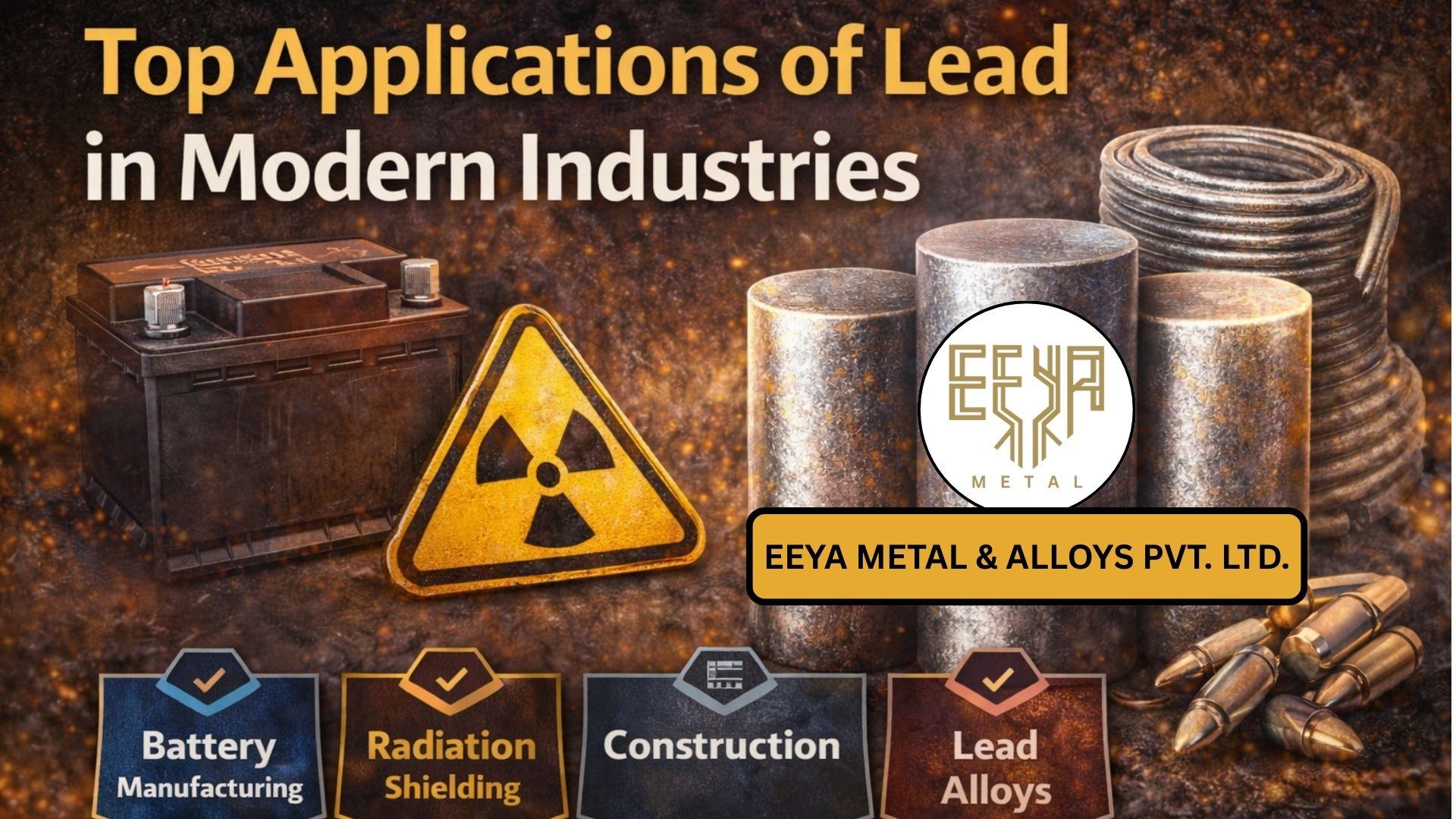
Why Lead Remains a Critical Metal in Industrial Manufacturing
Lead has been one of the most widely used metals in industrial manufacturing for centuries. Even with modern advancements in materials science, lead continues to play a vital role in multiple industries due to its unique physical and chemical properties.
From battery manufacturing and radiation shielding to construction and electronics, lead remains a highly reliable and versatile industrial metal.
Companies like EEYA Metal & Alloys Pvt. Ltd., a trusted non-ferrous metal manufacturer and recycler in India, supply high-purity lead and lead alloys that support modern industrial applications.
Also Read: How to Choose the Right Alloy for Your Industry | Complete Guide
What Makes Lead Valuable for Industrial Use?
Lead is preferred in many industries because of its distinct properties, including:
-
High density
-
Excellent corrosion resistance
-
Good electrical conductivity
-
Low melting point
-
High malleability
-
Superior radiation shielding capability
-
Strong recyclability
These characteristics make lead suitable for applications where durability, protection, and reliability are critical.
Top Industrial Applications of Lead
1. Lead-Acid Battery Manufacturing
The largest and most important use of lead is in lead-acid batteries.
Lead batteries are widely used in:
-
Automotive vehicles
-
Industrial backup power systems
-
Solar energy storage
-
Telecom infrastructure
-
UPS systems
Lead plates inside these batteries provide efficient energy storage and discharge capabilities, making them reliable for both automotive and industrial power systems.
Lead-antimony alloys are often used to improve strength, durability, and battery performance.
2. Radiation Shielding in Healthcare and Nuclear Facilities
Lead’s high density makes it extremely effective at blocking radiation, which is why it is widely used in:
-
Hospitals and diagnostic centers
-
X-ray and CT scan rooms
-
Nuclear power plants
-
Radiation laboratories
Lead sheets, lead bricks, and lead panels are installed in walls and protective equipment to protect medical professionals and patients from harmful radiation exposure.
3. Cable Sheathing and Electrical Infrastructure
Lead has excellent corrosion resistance and moisture protection properties, which makes it useful for cable sheathing.
It is commonly used in:
-
Underground power cables
-
Telecommunication cables
-
Submarine cables
Lead sheathing helps protect electrical cables from water, chemicals, and environmental damage, ensuring long-term reliability.
4. Industrial Alloys and Metal Manufacturing
Lead is widely used in combination with other metals to create specialized industrial alloys.
Some common alloys include:
-
Lead-Antimony alloys for battery grids
-
Lead-Tin alloys for soldering
-
Lead alloys for bearings and casting applications
These alloys improve strength, hardness, and durability, making them suitable for demanding industrial environments.
5. Construction and Infrastructure Applications
Lead has long been used in construction due to its durability and corrosion resistance.
Applications include:
-
Roofing sheets
-
Waterproofing materials
-
Flashing for building joints
-
Protective coatings
Its flexibility allows it to adapt to structural movements, making it valuable in long-lasting building materials.
6. Chemical Industry Equipment
Lead is resistant to many corrosive chemicals, which makes it suitable for chemical processing equipment.
It is used in:
-
Acid storage tanks
-
Chemical reactors
-
Protective linings in industrial plants
This corrosion resistance helps extend the lifespan of industrial equipment.
7. Ammunition and Defense Applications
Lead is also used in ammunition manufacturing due to its high density and malleability.
Applications include:
-
Bullets and projectiles
-
Military equipment components
-
Protective barriers
Its ability to absorb impact energy makes it effective in defense-related uses.
The Importance of Lead Recycling
Lead is one of the most recyclable metals in the world. Recycling lead helps:
-
Reduce mining activities
-
Lower production costs
-
Conserve natural resources
-
Support circular manufacturing systems
Scientific recycling processes allow used lead materials — especially batteries — to be refined into high-purity lead suitable for industrial reuse.
Companies like EEYA Metal & Alloys Pvt. Ltd. play an important role in sustainable lead recycling and refining.
Also Read: Top Industrial Uses of Lead, Tin, and Antimony – Complete Guide
EEYA Metal & Alloys Pvt. Ltd. – Trusted Supplier of Industrial Lead
EEYA Metal & Alloys Pvt. Ltd. is a reliable manufacturer and supplier of high-purity lead and lead alloys in India.
The company offers:
✔ High-purity refined lead
✔ Lead alloys for industrial applications
✔ Scientific recycling and refining processes
✔ Strict quality control and testing
✔ Reliable supply for manufacturing industries
By combining advanced refining technology with responsible recycling practices, EEYA supports industries with consistent and high-quality metal supply.
Conclusion
Lead remains an essential metal in modern industries due to its versatility, durability, and unique protective properties.
From energy storage and healthcare protection to infrastructure and industrial manufacturing, lead continues to support critical sectors of the global economy.
With responsible recycling and advanced refining technologies, companies like EEYA Metal & Alloys Pvt. Ltd. ensure that industries receive high-quality lead materials while maintaining environmental sustainability.


