


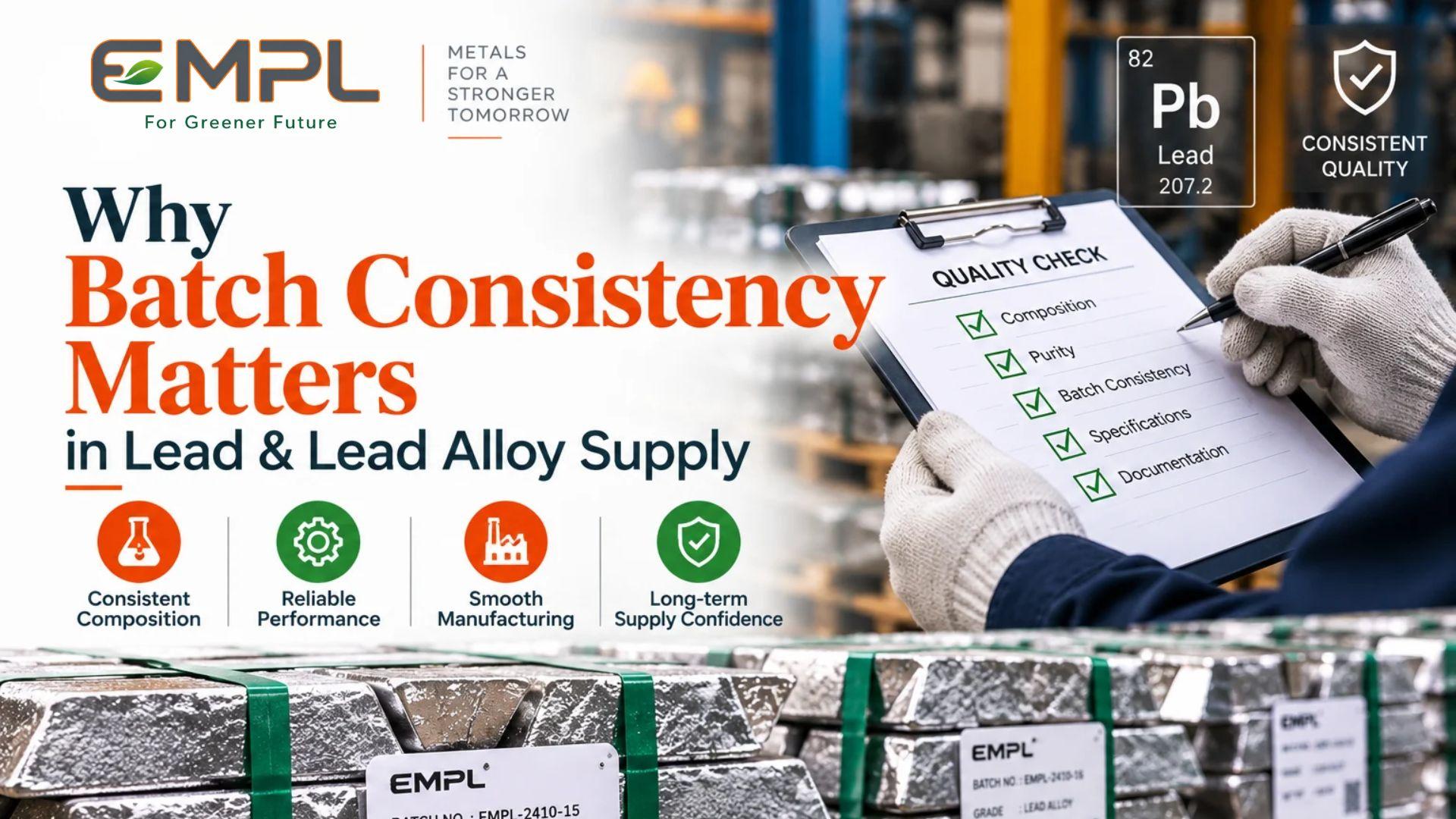
Why Batch Consistency Matters in Lead & Lead Alloy Supply
In industrial manufacturing, material consistency plays a major role in maintaining product quality, production efficiency, and reliable performance. When manufacturers source lead and lead alloys, receiving material that meets the same agreed specifications across different batches is essential for maintaining predictable manufacturing processes.
Even when two batches look similar, differences in chemical composition, impurity levels, or other material characteristics can affect how the metal performs in a specific application. This is why batch consistency is an important consideration when choosing a metal supplier for ongoing industrial requirements.
For businesses searching for a reliable metal supplier in India, understanding batch consistency can help them assess suppliers beyond price and availability. It also provides a practical way to evaluate whether a supplier can support repeat orders, specification requirements, and long-term procurement needs.
In this article, we explore what batch consistency means, why it matters in lead and lead alloy supply, and what industrial buyers should look for when choosing the best metal supplier for their requirements.
Also Read: How to Choose the Right Metal Supplier for Your Industry Needs
1. What Is Batch Consistency in Metal Supply?
Batch consistency refers to the ability to supply material that continues to meet the agreed specifications from one batch to another.
In lead and lead alloy supply, these specifications may include chemical composition, purity, permitted impurity levels, physical form, and other application-specific requirements.
For example, a manufacturer purchasing a particular lead alloy may need the concentration of alloying elements to remain within a defined range. Significant variation outside the agreed limits can create challenges during production or affect the characteristics of the finished product.
Batch consistency does not mean that every batch must have absolutely identical measurements. Instead, it means that material is produced or supplied within the required specification limits, supported by suitable quality checks and documentation.
For industrial buyers, this distinction is important when comparing suppliers and establishing long-term sourcing relationships.
2. Why Batch Consistency Matters in Lead and Lead Alloys
Lead and lead alloys are used in various industrial applications, including lead-acid battery components, cable sheathing, radiation shielding, and selected specialised products. Each application has its own material requirements.
Consistent batches help manufacturers maintain better control over their processes and reduce uncertainty when using incoming materials.
Consistent Chemical Composition
Lead alloys may contain elements such as antimony, tin, calcium, or other additions, depending on the formulation and intended application.
The concentration of these elements influences the properties of the resulting alloy. Manufacturers therefore need material that meets the agreed composition requirements.
A dependable metal supplier should be able to communicate the relevant material specifications and provide appropriate supporting documentation when required.
Predictable Manufacturing Processes
Manufacturing processes are generally designed around defined material characteristics. When incoming material varies unexpectedly, businesses may need to investigate process changes or adjust operating parameters.
Consistent material specifications help manufacturers work with more predictable inputs, although final performance also depends on equipment, processing conditions, product design, and other factors.
Reliable Product Quality
Finished-product quality depends on multiple factors, including raw material composition, production methods, inspection, and handling.
Batch consistency supports this system by helping manufacturers start with material that conforms to the agreed requirements. It cannot guarantee finished-product quality on its own, but it is an important part of maintaining quality control.
3. How Batch Variation Can Affect Industrial Manufacturing
When material falls outside the required specification, the effects depend on the application and the type of variation involved.
Potential challenges include:
-
Production adjustments: Unexpected material characteristics may require investigation or process changes.
-
Quality concerns: Non-conforming composition can affect whether the material is suitable for its intended use.
-
Additional inspection: Buyers may need further testing to determine whether a batch meets the agreed requirements.
-
Production delays: Material discrepancies can interrupt planned manufacturing activities while the issue is resolved.
-
Procurement complications: Replacements, returns, or additional verification can increase administrative workload and cost.
These outcomes are not inevitable whenever measurements differ. The key issue is whether the material remains within the applicable specification and performs as required for the intended application.
This is why industrial buyers should evaluate the supplier's ability to meet agreed specifications consistently rather than relying solely on visual appearance or a general product description.
Also Read: Industrial Lead Supply Chain in India: From Recycling to Manufacturing
4. The Role of Quality Control in Maintaining Batch Consistency
Quality control helps verify whether supplied material conforms to the required specification. The exact procedures depend on the product, application, and quality requirements.
For lead and lead alloys, relevant controls may include:
Chemical Composition Testing
Suitable analytical methods can be used to assess the concentration of lead and relevant alloying elements, along with specified impurities.
The appropriate testing method depends on the material and the accuracy required by the specification.
Purity Verification
Where purity is a key requirement, testing and documentation can help establish whether the supplied material meets the agreed limits.
Batch Records
Maintaining appropriate batch or lot references can help connect a consignment with the relevant inspection records and supply documentation.
Document Review
Buyers may request a certificate of analysis or material test report, where applicable, to review the reported composition and compare it with the agreed specification.
A structured quality-control process helps identify discrepancies and supports more informed material acceptance decisions.
5. Why Batch Consistency Is Important When Choosing a Metal Supplier in India
India has a diverse industrial manufacturing base, and businesses across different sectors may require lead and lead alloys for specialised applications.
For buyers sourcing material repeatedly, selecting a metal supplier in India involves more than comparing quotations. They also need to understand the supplier's ability to meet specifications, manage repeat orders, and communicate material information clearly.
When evaluating a supplier, consider the following factors:
Specification clarity: Does the supplier clearly identify the material grade, alloy composition, and relevant requirements?
Quality documentation: Can the supplier provide suitable supporting records when required?
Repeat-order capability: Can the supplier work to the same agreed specification across recurring orders?
Communication: Is the supplier responsive when buyers need clarification about composition, quantity, or documentation?
Delivery coordination: Can the supplier communicate order readiness and delivery arrangements according to agreed terms?
Application understanding: Does the supplier understand the material requirements associated with the buyer's intended use?
These factors help procurement teams evaluate suppliers on the basis of their actual requirements rather than price alone.
6. What Makes the Best Metal Supplier for Repeat Industrial Orders?
The phrase best metal supplier can mean different things to different businesses. For some buyers, price may be the primary consideration. Others may prioritise material specifications, documentation, supply continuity, or technical communication.
For recurring lead and lead alloy requirements, a suitable supplier should be able to align its offering with the buyer's agreed specifications and commercial requirements.
A Clear Understanding of Material Requirements
The supplier should understand the required grade, composition range, quantity, and relevant acceptance criteria.
Consistent Specification Management
Repeat orders should refer to the correct material specification so that both parties understand what is being supplied and purchased.
Appropriate Quality Verification
Where required, material testing and documentation should support verification against the agreed specification.
Transparent Communication
Clear communication about availability, order status, documentation, and any identified discrepancies helps buyers plan more effectively.
Dependable Order Coordination
Material preparation and delivery arrangements should be aligned with the agreed order terms and communicated clearly.
Rather than relying on broad claims, industrial buyers should assess a prospective supplier against these practical criteria. The best supplier for one application may not automatically be the best choice for another.
7. Batch Consistency and Long-Term Procurement Planning
For manufacturers with recurring material requirements, batch consistency is closely connected to procurement planning.
When material specifications and supplier expectations are clearly established, purchasing teams can make better-informed decisions about repeat orders, inventory, and incoming inspections.
A well-defined procurement process may include:
-
Documenting the required metal grade and composition.
-
Defining acceptable specification limits and relevant test requirements.
-
Agreeing on the documentation required with each order.
-
Reviewing supplied records against the purchase specification.
-
Recording discrepancies and following an agreed resolution process.
-
Reviewing supplier performance over time using relevant quality and delivery measures.
This approach can improve transparency between buyers and suppliers and provide a more structured basis for future purchasing decisions.
However, manufacturers should continue to apply appropriate incoming-material checks even when working with an established supplier. Supplier history is useful evidence, but it does not replace verification where testing is required.
8. Why Documentation and Traceability Matter
Batch consistency becomes easier to assess when material information is properly documented.
Depending on the product and supply arrangement, relevant records may include material descriptions, batch references, chemical analysis results, invoices, packing lists, and other agreed documents.
These records can help buyers:
-
Compare supplied material with purchase specifications.
-
Identify the batch associated with a particular order.
-
Investigate discrepancies more efficiently.
-
Maintain organised inventory and quality records.
-
Support internal audits or other applicable verification requirements.
Documentation should be accurate and correspond to the actual consignment. Buyers should also confirm which records are available and whether they meet the requirements of their specific application.
9. Questions to Ask Before Placing a Lead Alloy Order
Before finalising a purchase, industrial buyers can ask their prospective metal supplier a few practical questions:
-
What material grade or alloy composition will be supplied?
-
What specification limits apply to the material?
-
What testing or inspection records are available?
-
Can the supplied batch be linked to its relevant documentation?
-
What procedure is followed if material does not meet the agreed specification?
-
How will repeat orders be matched to the required grade?
-
What are the agreed quantity, packaging, and delivery terms?
These questions help establish expectations before the order is placed and reduce the risk of misunderstandings later.
They also give procurement teams a more objective basis for comparing potential suppliers in India.
Conclusion
Batch consistency is an important consideration in lead and lead alloy supply because industrial manufacturing depends on materials that meet defined requirements. Consistent chemical composition, appropriate quality verification, clear documentation, and effective communication can help businesses manage incoming materials and maintain more predictable production processes.
For companies looking for a reliable metal supplier in India, evaluating batch consistency is a practical step towards making informed procurement decisions. It helps shift the focus from price alone to the material specifications, supporting records, and supply arrangements that matter over the long term.
At EEYA Metal & Alloys Pvt. Ltd. (EMPL), understanding material requirements and the importance of quality consistency is central to the broader conversation about industrial metal supply.
If your business is evaluating lead or lead alloy sourcing options, clearly define your specifications, documentation requirements, and delivery expectations before placing an order.
Explore EEYA Metal & Alloys: www.eeyametal.com


