


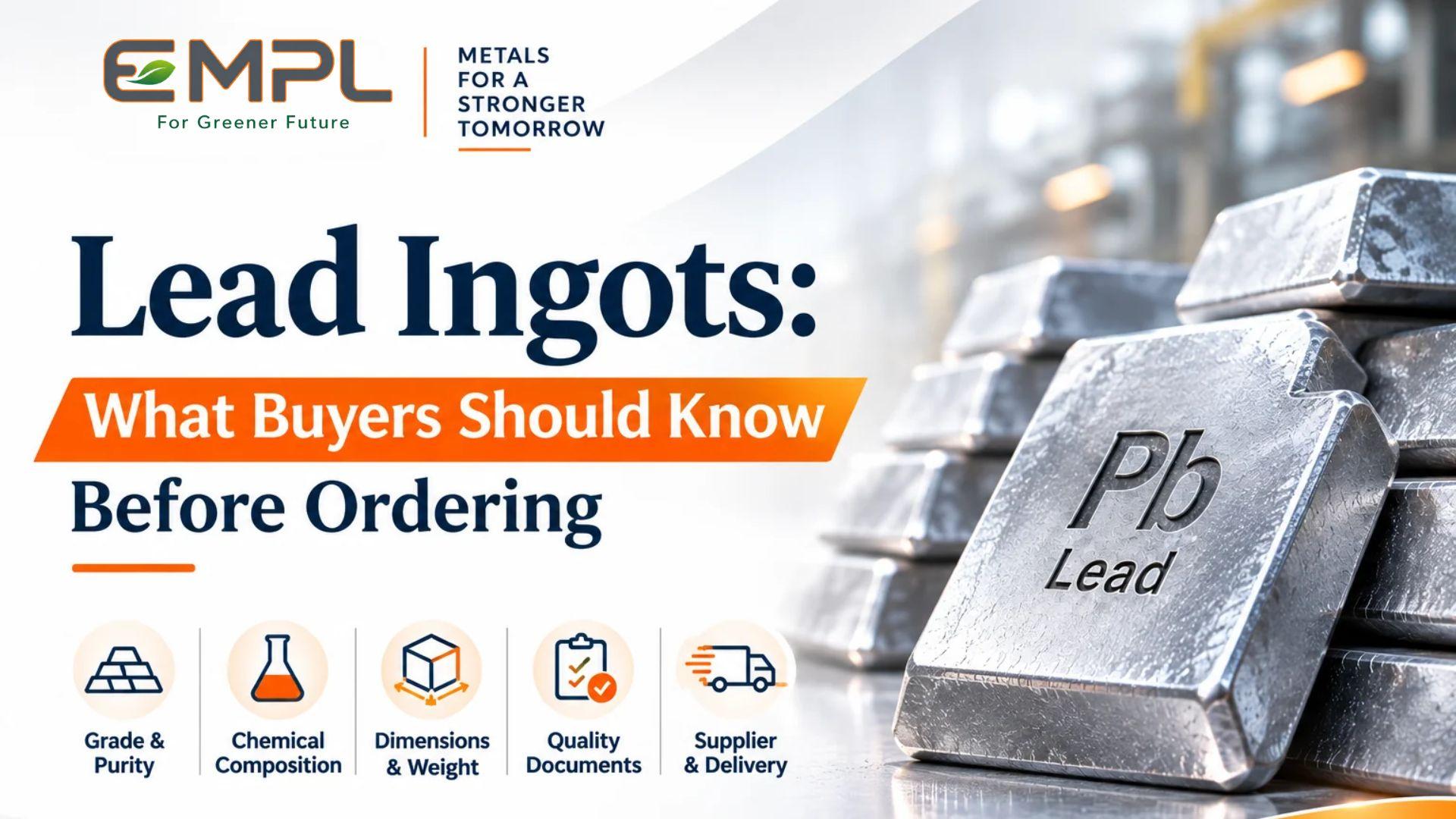
In industrial manufacturing, choosing the right raw material is an important part of maintaining product quality, production efficiency and operational consistency. When purchasing lead, businesses need to consider more than just the quoted price. Material grade, purity, chemical composition, dimensions, quality documentation and supplier reliability all play an important role in making the right procurement decision.
Lead ingots are widely used as an industrial raw material in applications such as lead-acid battery manufacturing, lead alloy production, radiation shielding, cable sheathing and specialised industrial products. However, different applications may require different material specifications. Selecting the wrong grade or overlooking important quality parameters can create challenges during manufacturing and material processing.
For procurement managers, manufacturers and industrial buyers, understanding the essential factors before ordering lead ingots can help minimise material-related issues and improve purchasing decisions.
In this guide, we explain the key considerations buyers should evaluate before purchasing lead ingots and selecting a suitable lead supplier.
Also Read: Uses of Lead in Industry | Applications & Lead Supplier India
1. What Are Lead Ingots?
Lead ingots are solid, cast forms of lead metal produced in standard or customised shapes for convenient storage, transportation and industrial use.
They serve as a raw material for manufacturers that require lead for further processing, melting, alloying or incorporation into finished products.
Depending on the intended application, lead ingots may be supplied in different grades and purity levels. Some industrial applications require high-purity lead, while others may require specific lead alloys containing controlled quantities of additional elements.
Common industrial applications of lead ingots include:
-
Lead-acid batteries: Lead is an essential material used in battery plates and other battery components.
-
Lead alloy manufacturing: Lead is combined with elements such as antimony and tin to produce application-specific alloys.
-
Radiation shielding: Lead's high density makes it useful in certain radiation-shielding applications.
-
Cable sheathing: Lead has been used in specialised cable applications where its material properties are suitable.
-
Industrial and engineering applications: Lead is used in selected counterweights, ballast and other specialised products.
Understanding the end application is the first step towards identifying the right lead ingot specification.
2. Check the Grade and Purity of Lead Ingots
One of the most important factors when purchasing lead ingots is the material grade.
Lead is available in different grades depending on its purity and chemical composition. The appropriate grade depends on the technical requirements of the manufacturing process and the final product.
For example, an application requiring high-purity lead may have different requirements from a process that uses lead as a base material for alloy manufacturing.
Before ordering lead ingots, buyers should confirm:
-
Required lead grade.
-
Minimum purity percentage.
-
Permissible impurity levels.
-
Applicable material specifications.
-
Suitability for the intended industrial application.
Purity is generally expressed as a percentage of lead content in the material. However, simply checking the stated purity percentage may not be sufficient. Buyers should also understand which impurities are present and whether their concentrations fall within the required limits.
A clear understanding of grade and purity helps businesses avoid material mismatches and select lead ingots that meet their production requirements.
Also Read: How Quality Control Impacts Industrial Metal Performance
3. Understand the Chemical Composition
Chemical composition is another critical consideration when evaluating lead ingots.
Even when two materials have similar physical appearances, their elemental composition may differ. The presence of other elements can influence the material's properties and suitability for specific industrial applications.
For high-purity lead, buyers may focus on the lead percentage and permissible impurity limits. For alloy manufacturing, the quantities of intentionally added elements become equally important.
Some commonly relevant elements in lead-based materials include:
-
Antimony: Used in selected lead alloys to modify properties such as hardness and mechanical strength.
-
Tin: Added to certain lead-based alloys to achieve specific material characteristics.
-
Calcium: Used in particular lead-alloy formulations, including some battery-related applications.
-
Silver: Present in certain specialised lead materials and applications.
The required composition depends on the intended use and applicable technical specification. Buyers should not assume that one composition is suitable for every application.
When purchasing lead ingots, it is advisable to request relevant chemical analysis details and compare them with the agreed material requirements.
4. Verify Ingot Dimensions and Individual Weight
Apart from chemical specifications, the physical characteristics of lead ingots also matter.
Lead ingots may be available in different shapes, dimensions and individual weights depending on the supplier's product specifications and manufacturing arrangements.
These physical parameters can influence material handling, storage, transportation and inventory management.
Before confirming an order, buyers should clarify:
Ingot dimensions: Confirm the length, width and height of the supplied ingots wherever dimensional requirements are relevant.
Individual weight: Understand the approximate weight of each ingot to plan handling and material movement.
Total quantity: Confirm the total ordered quantity and the applicable weight measurement method.
Weight tolerance: Establish acceptable variations in individual or total weight, where applicable.
Packaging requirements: Discuss how the ingots will be bundled, stacked or packed for transportation.
Clear communication about dimensions and weight helps avoid discrepancies during goods receipt, inspection and inventory reconciliation.
5. Ask for Quality Certificates and Chemical Analysis Reports
Documentation is an important part of industrial raw material procurement.
When purchasing lead ingots, buyers should understand what quality-related documents are available and whether they correspond to the supplied material.
Depending on the supplier's documentation practices and the agreed purchase terms, relevant documents may include:
Mill Test Certificate (MTC)
A Mill Test Certificate generally provides material-related information, which may include reported chemical composition and test results.
Chemical Analysis Report
This report provides details of the elemental composition of the material and helps buyers assess whether the lead ingots meet the agreed chemical specifications.
Batch or Lot Identification
Batch identification supports material traceability by connecting supplied material with its relevant production or testing records.
Invoice and Delivery Documentation
Commercial and delivery documents help verify the ordered quantity, supplied material description and dispatch details.
Before placing an order, buyers should confirm which documents will be provided. They should also check that the available reports correspond to the actual batch being supplied.
Proper documentation supports quality verification, procurement records and better material management.
6. Why Batch-to-Batch Consistency Matters
For businesses that regularly purchase lead ingots, consistency across different supply batches is particularly important.
A material specification may be acceptable for one order, but maintaining the same agreed requirements across repeat purchases is equally important.
Variations in purity, impurity levels or alloying elements can affect the suitability of material for a particular manufacturing process.
For example, manufacturers using lead as a base material for further alloying need to understand the incoming material's composition to manage their production requirements.
When evaluating a lead ingot supplier, buyers should consider:
-
Clearly defined material specifications.
-
Appropriate quality verification procedures.
-
Relevant batch identification.
-
Documentation of test results, where available.
-
Communication regarding specification deviations.
-
Consistency with agreed requirements across repeat orders.
A structured approach to batch verification can help manufacturers maintain better control over raw material quality and procurement planning.
7. Evaluate Packaging, Transportation and Safe Handling
Lead is a dense metal, and its weight makes appropriate packaging and transportation arrangements important.
Poorly planned handling can create difficulties during loading, unloading, storage and movement within industrial facilities.
Before ordering lead ingots, buyers should discuss the following:
-
Packaging and bundling arrangements.
-
Safe loading and unloading requirements.
-
Transportation suitability.
-
Storage conditions.
-
Material identification during handling.
-
Delivery quantity verification.
Lead also presents significant occupational health and environmental risks. Exposure can occur through inhalation or ingestion of lead-containing dust and fumes, particularly during activities such as melting, cutting, grinding and other processing operations.
Businesses handling lead should follow applicable occupational safety and environmental requirements. Appropriate engineering controls, workplace hygiene, personal protective equipment and safe storage practices are important parts of responsible lead management.
Material procurement should therefore consider not only product specifications but also safe handling throughout the supply chain.
8. Confirm Delivery Timelines and Supply Coordination
For industrial manufacturers, raw material availability is closely connected to production planning.
A delay in the delivery of lead ingots may affect inventory levels, manufacturing schedules and customer commitments.
This is why procurement teams should evaluate supply coordination before confirming an order.
Important points to discuss include:
-
Order quantity and material availability.
-
Expected dispatch date.
-
Estimated delivery timeline.
-
Transportation arrangements.
-
Dispatch documentation.
-
Communication regarding order progress.
-
Procedures for reporting quantity or material discrepancies.
For businesses with recurring lead requirements, clear communication and dependable order coordination can make the procurement process more organised.
Buyers should establish realistic delivery expectations and ensure that the agreed terms are documented before placing the purchase order.
9. How to Choose the Right Lead Ingot Supplier in India
Selecting a suitable lead ingot supplier is an important decision for manufacturers and procurement teams.
The lowest quotation does not necessarily represent the best purchasing value. Buyers should evaluate the supplier based on material suitability, documentation, quality requirements and overall order coordination.
Here are some important factors to consider when selecting a lead ingot supplier in India:
1. Product specifications: Check whether the supplier can offer material matching your required grade, purity and chemical composition.
2. Quality documentation: Understand the availability of relevant chemical analysis reports, test certificates and batch details.
3. Material consistency: Evaluate how the supplier manages agreed specifications across repeat orders.
4. Order flexibility: Discuss available quantities, packaging requirements and product specifications before confirming procurement.
5. Delivery coordination: Review dispatch timelines, logistics arrangements and communication practices.
6. Technical understanding: A supplier should be able to understand the buyer's material requirements and communicate relevant product specifications clearly.
7. Commercial transparency: Ensure that product descriptions, quantities, pricing terms and delivery conditions are clearly documented.
A well-informed supplier evaluation process can help businesses build stronger procurement relationships and reduce avoidable material-related uncertainties.
Also Read: How to Choose the Right Metal Supplier for Your Industry Needs
10. Common Mistakes to Avoid When Ordering Lead Ingots
Even experienced procurement teams can overlook important details when purchasing industrial metals.
Some common mistakes include:
-
Selecting lead ingots based only on price.
-
Not confirming the exact material grade.
-
Ignoring impurity limits and chemical composition.
-
Overlooking individual ingot weight and total quantity.
-
Not requesting relevant quality documentation.
-
Failing to establish batch identification requirements.
-
Not discussing packaging and transportation arrangements.
-
Assuming that all lead ingots are suitable for every industrial application.
Avoiding these mistakes can make the purchasing process more structured and help manufacturers select material that meets their technical and operational requirements.
Lead Ingot Procurement Checklist for Industrial Buyers
Before placing your next order, use this checklist to review the essential procurement requirements.
| Parameter | What to Verify |
|---|---|
| Material Grade | Required grade and applicable specification |
| Purity | Lead content and permissible impurity limits |
| Chemical Composition | Elemental composition and alloying requirements |
| Dimensions | Ingot length, width and height, where applicable |
| Weight | Individual ingot weight and total quantity |
| Documentation | Available MTC and chemical analysis reports |
| Traceability | Batch or lot identification |
| Packaging | Bundling, stacking and transportation suitability |
| Delivery | Dispatch schedule and delivery terms |
| Supplier | Product suitability, communication and supply coordination |
Documenting these requirements before ordering lead ingots can help reduce misunderstandings and improve procurement efficiency.
Conclusion: Make Informed Decisions When Buying Lead Ingots
Purchasing lead ingots requires careful consideration of several technical and commercial factors. From material grade and purity to chemical composition, dimensions, documentation and delivery coordination, every parameter contributes to the overall procurement decision.
For industrial manufacturers, choosing the right lead ingot is not simply about purchasing a raw material. It is about ensuring that the material is suitable for the intended application and meets the agreed requirements.
A structured procurement process, supported by clear specifications and appropriate quality documentation, can help businesses improve material selection and establish more dependable supply relationships.
At EEYA Metal & Alloys Pvt. Ltd. (EMPL), we believe that quality specifications, informed material selection and dependable industrial supply are important foundations of long-term business relationships.
Looking for industrial metal solutions?
Explore EEYA Metal & Alloys Pvt. Ltd. and learn more about our metal solutions at www.eeyametal.com.
Quality you trust. Performance you rely on.


